The search for youth in an ageing world

The search for youth in an ageing world

The search for youth in an ageing world

(Level B2 and above) – Longevity biotech, idioms and phrases related to age.

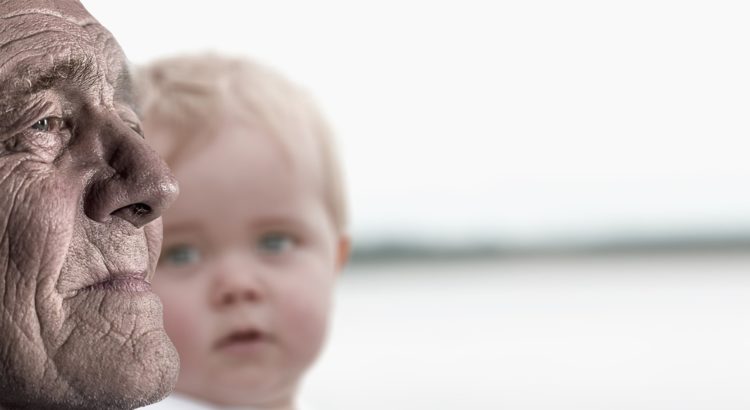
At 67, Dr Tyger is no spring chicken. In fact, he is starting to show signs of age. He has quite a few senior moments too, like losing his lab coat or losing both his keys and glasses last week. But he refuses to act his age – he still goes paragliding and mountain climbing for example. His dynamism shows that age is just a number. In fact, he plans on living healthily to a ripe old age. That’s why he runs longevity biotech research projects.

(Level B2 and above) – Longevity biotech, idioms and phrases related to age.

At 67, Dr Tyger is no spring chicken. In fact, he is starting to show signs of age. He has quite a few senior moments too, like losing his lab coat or losing both his keys and glasses last week. But he refuses to act his age – he still goes paragliding and mountain climbing for example. His dynamism shows that age is just a number. In fact, he plans on living healthily to a ripe old age. That’s why he runs longevity biotech research projects.

Written and compiled by Benedicte Gravrand, English trainer at The Language House in Geneva.

Biotechnology is the use of bacteria and plant and animal cells for industrial or scientific purposes, for example, to make drugs or chemicals.

Even if life expectancy has increased around the world, good health expectancy has increased at a slower rate. So, we live longer, but not necessarily healthier. It is indeed a mixed blessing.


All words in bold are in the vocabulary exercise


The typical diseases of old age nowadays are cancer, heart disease, diabetes and senility. And old age is what longevity biotech wants to tackle.

Some people, including scientists, think we should classify ageing as a disease. But old age is not a disease, it is the natural outcome of a long life.


The difference between biological age and chronological age


As many people now live into their 90s and beyond without chronic illness, longevity biotech wants to discover what differentiates these healthy agers and translate these findings into medicine.

Today, the sector is estimated to be worth $26.5 trillion; it involves over 50,000 companies, more than 10,000 investors and over 1,000 research and development (R&D) centres.

For example, Alto Labs in the US is working on technology that can reprogram cells to rejuvenate and potentially prolong human life. Insilico Medicine in Hong Kong uses artificial intelligence and deep learning technology to identify molecules to treat various cancers. Acorn Biolabs in Canada provides cell preservation services for non-invasive cell freezing that can be used for future medical applications. Juvenescence in Ireland develops therapies that allow patients to slow or reverse ageing. Many studies are published, including a recent one in mice, that shows that transplanting certain healthy gut microbiota (bacteria that live in the intestines) can reverse ageing. And there is a new Longevity Biotechnology Association which represents geroscience and gero-therapeutics (the development of new medicines and therapies to prevent and cure, rather than merely manage, the health conditions of late life).


Should age – and time itself – be challenged? Or just managed?


Addressing the gap between health span and lifespan is essential for long-term global economic prosperity, says Kristen Fortney, CEO of BioAge Labs, a clinical-stage company. Furthermore, “older people have a fundamental right to live healthy, full lives, and to have their medical conditions taken seriously as targets deserving of clinical interventions, rather than simply dismissed as inevitable consequences of ageing.”

As the world of humans is getting older, this is a timely topic which raises many questions. Should age – and time itself – be challenged? Or just managed?

Is this the medical version of the fountain of youth or the elixir of life?

Will better health help overcome what many people of a certain age suffer from, ageism?

Will longevity cures be reserved for richer people?

Finally, if we do find cures for age-related diseases, what will old people die off?

Dr Tyger certainly thinks about those questions when he is not working on his cell regeneration project.


Sources: UNCTADAGBILBAScispotMedium    


Age-related idioms and phrases

  • No spring chicken: usually used in negative contexts to say someone is no longer young. A spring chicken is a young person.
  • Senior moment: an occasion when someone forgets something – Is this just a senior moment or am I losing my memory? I can’t remember where I parked the car.
  • Act your age! said to someone to tell them to stop behaving like someone who is much younger – Just act your age and apologize to her!
  • Age is just a number: no matter how old we are, we can do anything. Yuichiro Miuro climbed Mount Everest when he was 80 years old. This shows that age is just a number.
  • Ripe old age: an age at which someone is very old – She lived to the ripe old age of 103.
  • A certain age: not young any longer – Men of a certain age are more likely to lose their hair.
  • Come of age: to reach the age when you are legally an adult.

Sources: Cambridge dictionary; Macmillan dictionary Teachify

Newton’s law of money

Newton’s law of money

Newton’s law of money

Tips, exercises and Tips, exercises and fascinating articles for English learners from A2 – C2 levels.
Read, enjoy and become a better communicator in English.
Many of the blogs below were published on the Le Temps newspaper website during the past six years.

After discovering calculus, the reflecting telescope, the nature of light and colour, and revealing the laws of gravity, motion, and cooling, the brilliant English scientist and godfather of the Age of Enlightenment, Sir Isaac Newton decided it was time for a radical career change.

He retired his telescope and lowered his gaze to more worldly matters: money.

In 1696, he was appointed Warden (later Master) of the Royal Mint, the United Kingdom’s oldest company and the official maker of British coins. Newton left the quiet village academic life of Cambridge and moved into the Tower of London.

The nation’s finances were in dire straits (a terrible situation). Whereas today’s coins are just tokens of their value, the coins of this period contained their value in silver or gold.
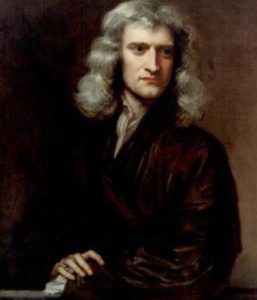
Sir Isaac Newton

At the time of Newton’s appointment, most coins in circulation were either underweight or counterfeit (fake). The problem was threefold: hand-struck (hammered) silver coins were clipped or shaved (had pieces cut off them) and their value (weight) reduced. There was “heavy” money and “light” money.

‘Clippers’ were criminals, often in organised gangs, that clipped or shaved away at the edge of the coins.

Secondly, the machine-made silver coins produced by the Royal Mint introduced in 1662 were easily copied. Within weeks of a new coin being released, counterfeiters had developed machines that produced almost identical coins made of copper, tin, and other cheap metal coins.


Gangs of criminals shaved, clipped, stamped, molded, and melted down coins


The third problem was that the silver in the coins often fetched a higher price in Paris and Amsterdam than in London. Large quantities of coins were melted down and sold abroad.

Gangs of criminals shaved, clipped, stamped, molded, and melted down coins. It was a lucrative, but dangerous business. It was high treason (haute trahison), and the punishment was severe. Those convicted were often hanged (sometimes hanged, drawn, and quartered) if they were male, and burnt alive if they were female.

The Mint was in urgent need of a detective-cum-visionary with the qualities of Sherlock Holmes and an extensive knowledge of metallurgy and mathematics to restore integrity to the nation’s money supply. Newton was the über-perfect candidate; obsessive, tenacious, and a brilliant administrator and alchemist.

Newton brought order to chaos. He managed over the next 30 years to recall all coins in circulation and replace them with a more secure coinage, and then introduced the gold standard.
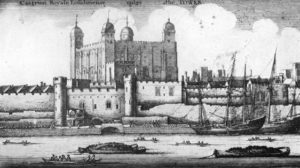
 

The Tower of London in the 17th century

He relentlessly hunted down counterfeiters, frequenting sleazy taverns and dank prisons, gathering information and evidence, and developed a network of spies and informants.

The most influential counterfeiter of the day and Newton’s arch nemesis was William Chaloner, who rose from nail-maker’s apprentice to quasi-influential gentleman on the profits of counterfeiting, theft, fraud, and duplicity. It took Newton two years to gather enough evidence to end Chaloner’s life and career. It was personal. Chaloner publicly humiliated Newton and almost convinced authorities that he would be the best man to run the mint because of his extensive “inside” knowledge of counterfeiting.

He was convicted of high treason and hung on 22 March 1699.

The book Newton and the Counterfeiter by Thomas Levenson documents their epic game of cat and mouse.

Newton recalled (ordered the return of) the coin supply and replaced them with new coins with regular machined edges (much like the coins of today) that couldn’t be clipped so easily.  Five new mints were opened in Bristol, Chester, Exeter, Norwich and York to supplement the Tower Mint in London. It was a slow process and caused some financial panic and instability. It was also expensive, costing the government millions of pounds.

To calm the unrest, the government promised that every coin would be refunded, no matter what condition. This led to a last-minute clipping and shaving frenzy.


The Government introduced a new tax called the Window Tax to recuperate money spent on the recoinage


The Government introduced a new tax called the Window Tax to recuperate the money spent on the recoinage. Households were taxed on the number of windows in their home. As a result, many people bricked up their windows and covered their vents. The resulting reduction in access to light and air brought widespread anguish and illness, including cholera, typhus and smallpox. The tax was wildly unpopular and continued to cause misery for many years after the Great Recoinage was complete.

Despite this, Newton stabilised and modernised the English currency. He was the first non-royal figure on a note, the one pound note (1978 -1984), no longer in circulation.

His famous quote , “standing on the shoulders of giants” (see below)) is inscribed on the edges of the two pound coin. It is also the name of an Oasis album.


The life of Sir Isaac Newton


British economist, John Maynard Keynes described the genius of Enlightenment ( le siècle des Lumières ) as “one of the greatest and most efficient of our civil servants”. A fine accolade, but not quite as sumptuous as this from poet Alexander Pope:

Nature and Nature’s laws lay hid in night: – God said, “Let Newton be!” and all was light.

Newton quotes:

If I have seen further than others, it is by standing upon the shoulders of giants. 

I can calculate the motion of heavenly bodies, but not the madness of people. 

We build too many walls and not enough bridges.

To every action there is always opposed an equal reaction.

More reading:

Newton and the Counterfeiter by Thomas Levenson. Read more here

Newton by Peter Ackroyd. Read more here
The clouds of war engulf me every day

The clouds of war engulf me every day

Olena is an English language trainer from Ukraine now living in France. She spoke to Garry Littman about her experience during the ongoing war. (Level B2 +)

I wake up every morning at around 5.30am. Bang. I’m awake. Falling back into a warm slumber is out of the question. The moment I open my eyes a little seismic shock of fear and stress ripples through me. My overworked adrenalin kicks in. Bang. I’m awake. A collection of hi-resolution images force themselves onto the screen of my consciousness. They have a life of their own. That’s what war does.

There’s me at my kitchen window, watching in silent disbelief as *russian military vehicles roll down Peremogha Ave in Kyiv.


Pandemonium on the platform

There’s the pandemonium on the platform at the Kyiv Central Railway station where the train to Ivano-Frankivsk is due to depart. The platform is overflowing with people, children, pets in cages, and bags. So many bags. Bags of all shapes and sizes, all overflowing, bursting at the seams with belongings. And then inside the dark carriage with the grey plastic curtains drawn and we are told to use only our phone torches. The conductor, a woman in her mid 40s, is calm and helpful. We listen and nod to her every word. On the underpass, a troop train with Ukrainian military equipment thunders passed heading to the east, Kyiv. We are travelling to the west.

The clouds of war engulf me every day. This is my life now. I am lucky, of course. I am a survivor living in exile in France. I had another life, and then on February 24, just over a year ago, the war broke out.

One of the few constants left in my life is my work. I am an English teacher. Let me say that again. I am a passionate English teacher. I have been working for language schools and independently for 25 years.

Today is Tuesday and my first lesson starts at 7 am, so there is plenty of time to prepare. My first student Katya works in logistics, and she really needs English. We’ve been working together for more than two years.  I am in France in a small town near Geneva and she is now in exile in Spain in a small town near Alicante, and we have both electricity and Internet access.


Electricity is a luxury

We both know this is a luxury. In Ukraine, power cuts are a part of everyday life. It was Katya that told me this joke:

“Wikipedia says: ‘I have all the information you need!’ Then Google adds: “And I can find any information in a matter of seconds!” Finally, the electricity grid pipes up: “Well, well, well… only if I come to the party…”

Our teacher-student relationship has changed. We study English, but the discussion is much more diverse. A few grammar points and some exercises and a lot of sharing about our new lives in the countries where we are staying, and the peculiarities of receiving temporary status, the opening hours of the supermarkets, prices for food, medical aid and many other things.

My next lesson is at 9.30 with Aleksandra. She is a lawn tennis coach who works with juniors in a sports school. She lives in Kyiv which means last month we completed just two of eight scheduled lessons.


My heart skips a beat

I have enough time for breakfast, to look over the material for the lesson and to read the dense and depressing, daily load of war updates. Every day I scan Країна_інфо (Country Info) the national channel on Viber and the Telegram channel of Oleg Synegubov, the governor of Kharkiv region to get the latest information and then I go onto Facebook to read about current events detailed by analysts, witnesses, war correspondents or just other people, perhaps like me, who are willing to have their say. Kharkiv is my hometown. Every time a town and village in the region is mentioned in the news my heart skips a beat.


Mariupol hospital airstrike


I have always been a bit of a news junkie. Now I’m trying to restrict myself to a few minutes in the morning and in the evening. It also reduces the panic.

Of course, half an hour before my lesson with Aleksandra, she sends me a short message on Viber:

“Good morning, Lena! After yesterday’s attacks, we are without electricity again :((”

And I answer: “Good morning, Aleksandra! I understand. See you next time.”

I’m so used to receiving such messages from Aleks on short notice. Once upon a time I charged the fee for the lesson if my student cancelled less than 24 hours before the class. Now, it’s out of the question. No talking about the money in this situation.


The war has put everything on hold


A couple of weeks ago she texted me, asking if it would be better to stop the lessons and put them on hold. But we continue. The war has put everything on hold. The fact that we manage to have an occasional lesson together is a victory for normality.

We go on, trying to live our life as close to normal as possible.


I began lessons with Aleks before the war. Her school is now closed, so she is out of work and stays at home. She jokes that she has more free time and that’s what she always dreamt of. She wanted to devote it to studying, but the lack of electricity has ruined her plans. Aleks doesn’t need English for professional reasons. I like that. She learns for her own pleasure, to travel again one day in the future, to communicate with other people, and to read in English. The wonderful news is that she’s going to be a mum, and last week she and her husband held a gender reveal party for their friends and family.


The russians have taught all Ukrainians time-management skills

Last lesson she told me that the russians have taught all Ukrainians time-management skills: now that we have 6-8 hours of electricity per day, if we are lucky, it means we do all the recharging, computer work and house chores much quicker than before.

I’m proud of my people. We are trying to live a normal life: go to work and school when it’s quiet, stay in shelters when the map of Ukraine is covered in red which is the color of air raids. And we return again to our working places, families, computer screens, to do what we have to do. We don’t only earn money to live, but we earn money to donate to numerous funds and organisations which help our soldiers, medical people, children in need and refugees. We all have boundless faith in the Armed Forces of Ukraine. We know they can protect us.

Life goes on.


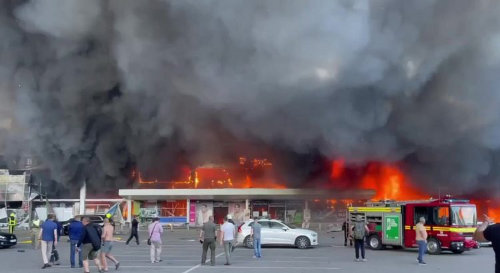
Photo above: Bombing of shopping centre in the central Ukrainian city of Kremenchuk

*We spell russia in Ukraine – with no capital R. Since the war began, the people and the country are spelt with a small r, even in official circles.

An apple a day keeps the scientists away

An apple a day keeps the scientists away

An apple a day keeps the scientists away

Tips, exercises and fascinating articles for English learners from A2 – C2 levels.
Read, enjoy and become a better communicator in English.
Many of the blogs below were published on the Le Temps newspaper website during the past six years.

A short story collaboration by Maria Duran and Garry Littman

“Thanks for the apple, mate.”

As my eyes slowly start to adjust, I make out the shadow of a person standing over me.

“You can speak, can’t you?”

“Yes. I can speak,” I reply with difficulty. My body feels like it has been disassembled and reassembled, molecule by molecule. All things considered, that’s probably what has happened.

“Who are you?” I ask weakly.

“My name is Felix, and I suppose your name is Mark,” he replies brightly.

“How do you know that?” I ask, my head spinning.

“Oh! It’s written on your lab coat,” he replies and motions for me to follow him. I do, with great effort.

“You are the one who sent the apple, aren’t you?” Felix asks. I do not reply.

“Where are we?” I ask suddenly. Felix turns and gives me a cryptic smile.

“You’ll see!”

He leads me through a curtain. I cringe from the sudden brightness. I look up and I am greeted by 25 men and five women all wearing white lab coats and almost all of them wearing glasses, and all and every one of them, staring at me.

“Everyone, this is Mark,” Felix exclaims. He turns to me.

“Welcome Mark, to the greatest gathering of teleporting scientists on Earth, or somewhere, sometime, some place, at least!”

They continue to stare at me. I offer a weak smile.

“Oh, you must be hungry,” Felix says suddenly.

“Do you want an apple?” 


I shake my head. What is his obsession with apples? I sit down at a table and rub my throbbing temples.

Apples, apples, apples…. Finally, something clicks, and I remember the moment, our very own Gala apple disappeared from the launch portal of our teleporter. And the hush of wonderment that followed.

I remember returning to the laboratory that same night, crouching in the portal, the blinding flash and the feeling of being dismantled organ by organ, cell by cell.

My stomach clenches and I feel the nausea again.

“Mate, you really look like you need an apple,” Felix’s voice brings me back to reality. He sits down in front of me.

“Don’t despair. There is some good news.  First of all, thanks to you and your colleagues we have an endless supply of apples. But the most exciting news is that Martin, the scientist who had been here the longest, just got sucked back home. He’ll be going home to quite some accolades, maybe a Nobel prize!”

I perk up and try to unscramble my head.

“How long has he been here?” I ask as professionally as I can.

“Precisely 16 years, 40 days, 5 hours and 10 seconds,” Felix answers checking his watch. “Unfortunately, that seems to be about 4.76 seconds of what we used to consider normal time. A bit of rude glitch in time, I’m afraid.

“According to our calculations, Emma is going to be sucked back in around an hour,” Felix continues without pause.


“You should come watch! I have to go check on the apple trees, but feel free to look around.”

I watch him leave. My stomach rumbles. I reach for the apple Felix has left on the table. It is a Gala. It looks somewhat familiar. I take a large bite. I feel like Alice in Wonderland.

I think I know what this wonderland is. I am eating a teleported apple in a wrinkle in time between two teleport portals.

How am I going to describe this in the Modern Science Journal? I shake my head. I don’t need to worry about that now. After all, I have a long time ahead of me to think about it, as I take another bite of my Gala apple. Really quite delicious.


“An apple a day keeps the scientists away” is a short story collaboration that originated from a brainstorming session during a writing course at The Language House.

 Maria Duran is a 17 year old student at College Emilie-Gourd.